skip to main |
skip to sidebar
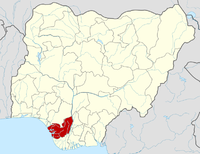
Britis h prosecutors today began to lay out the money laundering case against associates of former Governor James Ibori by telling a London court that Ibori committed ‘massive theft’ during his eight-year tenure as governor of Delta state. In the resumed money-laundering trial of Ibori’s associates, prosecutors told the Southwark Crown court, presided over by Mr Christopher Harding, that Ibori used third party agents and nominees to siphon state funds and acquire properties and assets within and outside Nigeria. The case is being presented before a jury of 12 randomly selected members of the Britis
 h public. The jurors were called in about 3:25p.m. (London time), following which the prosecution team called in Mr. Chima Umezurike as their first witness in the case. The witness, a lawyer who is a member of both the Nigerian and English bars, testified on the Nigerian constitutional requirements and code of conduct for public office holders in Nigeria, including governors. Mr. Umezurike was asked to explain the grounds on which a governor may be disqualified from public office. He spoke on section 182 of the criminal code, stating that a public official may be disqualified on the ground of theft or the handling of stolen goods, including the use of third party agents and nominees for the same purposes. Asked to clarify what items are included in the declaration of assets, according to the 5th schedule of the 1999
 Nigerian constitution and the code of conduct for public officers, the witness stated the following: one, that public office holders shall not maintain a bank account outside Nigeria and, two, that public office holders shall provide written declaration of assets and properties to the Code of Conduct Bureau. He explained that any property or asset declared, but found not to be linked or attributed to known income, is deemed to be evidence of a breach of the code of conduct. Mr. Umezurike testified that the Revenue Allocation and Fiscal Commission, established by the 1999 constitution, sets the salaries for public office holders. The salaries of public office holders, which is availab
 le to the public via the official website of the commission, stipulates a basic annual salary of N849,000 for the governor, including allowances for accommodation, transport and furniture, which are, respectively, 100%, 350% and 300% of the basic salary. On the question of the punishment prescribed for breach of the stated laws, the witness responded that these are listed in section 18 of the 5th schedule of the constitution, as well as any additional penalties prescribed by the constitution. These punishments include vacation of the office (in this case governor), seizure or forfeiture to the state of any asset or property acquired corruptly, and imprisonment.
 On December 1, a total of 25 journalists were imprisoned in Sub-Saharan Africa in retaliation for their journalism, and nearly 90 percent of these journalists were detained without charges in secret detention facilities, according to an annual census of the Committee to Protect Journalists (CPJ). Countries as wide ranging as Eritrea, Iran, and the United States were on the list of nations who had imprisoned journalists without charge. With at least 19 journalists behind bars, Eritrea by far leads the list of shame of African nations that imprison journalists. Eritrea holds this dubious distinction since 2001when the authorities abruptly closed the private press by arresting at least ten editors without charge or trial. The Eritrean government has refused to confirm if the detainees are still alive, even when unconfirmed online reports suggest that three journalists have died in detention. CPJ continues to list these journalists on its 2009 census as a means of holding the government responsible for their fates. In early 2009, the government arrested at least six more journalists from state media suspected of having provided information to news Web sites based outside the country. Eritrea’s neighbor, Ethiopia ranked second among African nations with journalists in jail. Four journalists were held in Ethiopian prisons, including two Eritrean journalists who are detained in secret locations without any formal charges or legal proceedings since late 2006. The Gambia, with its incommunicado detention of reporter Ebrima Chief Manneh since July 2006, and Cameroon, which has imprisoned the editor of a newspaper since September 2008, completes the list of imprisoned journalists for Sub-Saharan Africa.
My name is Ilori George. I am the wife of Bode George who was recently sent to jail by a Kangaroo court in Lagos. I write this article to show my discontent over the wrong imprisonment of this great man who has served his country with an affective disorder to make sure that the vestiges of corruption democracy were uprooted. My hubby is a patriot, lovely and almost perfect husband. Although sometimes stingy, he did everything to send his children to the best school in the world; and me to the best shopping malls across the globe. Although older than I, he’s better than most young men – even in bed. What else does his country want from him? What and what else?
 h prosecutors today began to lay out the money laundering case against associates of former Governor James Ibori by telling a London court that Ibori committed ‘massive theft’ during his eight-year tenure as governor of Delta state. In the resumed money-laundering trial of Ibori’s associates, prosecutors told the Southwark Crown court, presided over by Mr Christopher Harding, that Ibori used third party agents and nominees to siphon state funds and acquire properties and assets within and outside Nigeria. The case is being presented before a jury of 12 randomly selected members of the Britis
 h public. The jurors were called in about 3:25p.m. (London time), following which the prosecution team called in Mr. Chima Umezurike as their first witness in the case. The witness, a lawyer who is a member of both the Nigerian and English bars, testified on the Nigerian constitutional requirements and code of conduct for public office holders in Nigeria, including governors. Mr. Umezurike was asked to explain the grounds on which a governor may be disqualified from public office. He spoke on section 182 of the criminal code, stating that a public official may be disqualified on the ground of theft or the handling of stolen goods, including the use of third party agents and nominees for the same purposes. Asked to clarify what items are included in the declaration of assets, according to the 5th schedule of the 1999
 Nigerian constitution and the code of conduct for public officers, the witness stated the following: one, that public office holders shall not maintain a bank account outside Nigeria and, two, that public office holders shall provide written declaration of assets and properties to the Code of Conduct Bureau. He explained that any property or asset declared, but found not to be linked or attributed to known income, is deemed to be evidence of a breach of the code of conduct. Mr. Umezurike testified that the Revenue Allocation and Fiscal Commission, established by the 1999 constitution, sets the salaries for public office holders. The salaries of public office holders, which is availab
 le to the public via the official website of the commission, stipulates a basic annual salary of N849,000 for the governor, including allowances for accommodation, transport and furniture, which are, respectively, 100%, 350% and 300% of the basic salary. On the question of the punishment prescribed for breach of the stated laws, the witness responded that these are listed in section 18 of the 5th schedule of the constitution, as well as any additional penalties prescribed by the constitution. These punishments include vacation of the office (in this case governor), seizure or forfeiture to the state of any asset or property acquired corruptly, and imprisonment.


